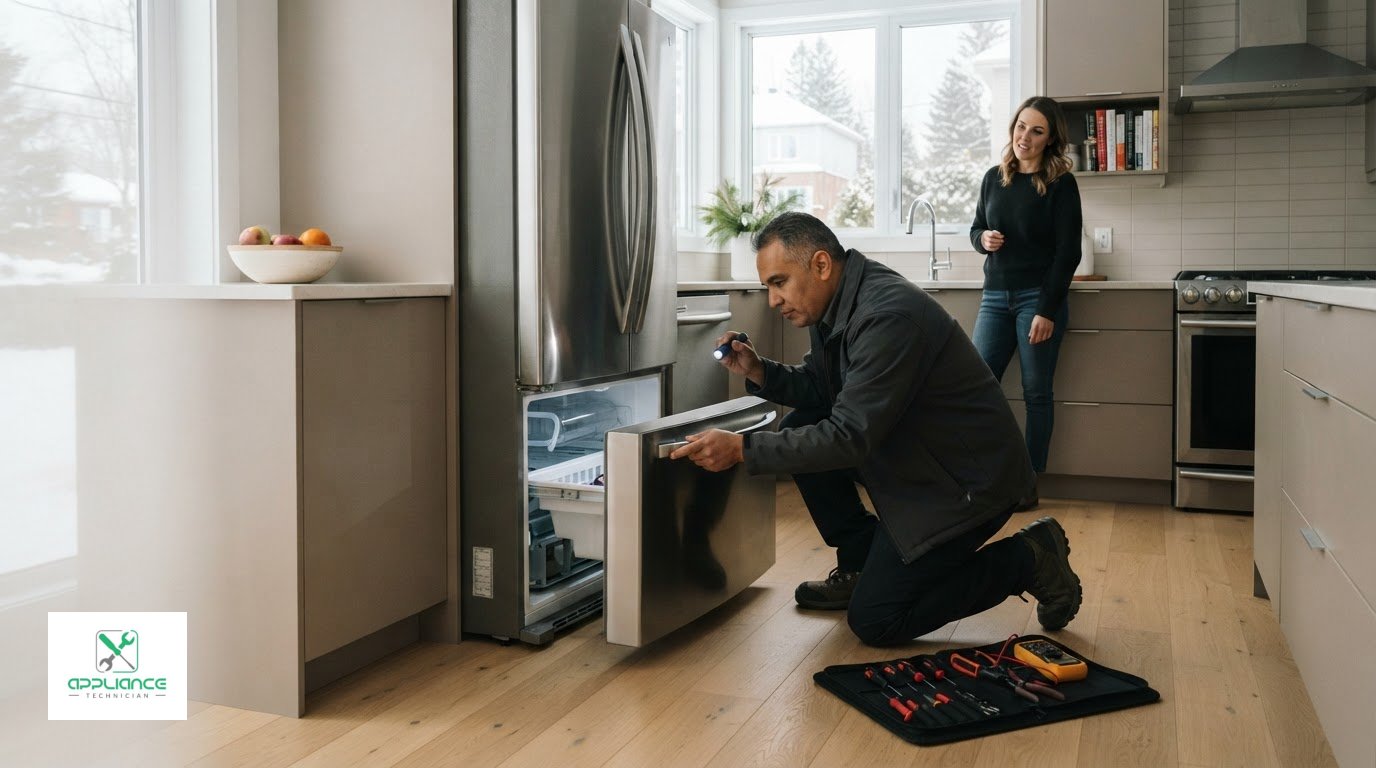
If you’re noticing freezer frost buildup in Nepean, the frost pattern can offer clues, but it can’t confirm the cause. A light coating after the door has been opened may be different from thick ice that keeps returning. Start by checking that the door closes fully, limiting how long it stays open, and moving any packages that could block it.
Frost forms when moisture in warm air freezes on cold surfaces. Repeated buildup may be related to door closure, storage or an operating issue. This guide explains what to look for, which checks are safe to do at home and when recurring frost may need a repair diagnosis.
Freezer Frost in Nepean: What’s Normal and What’s Not?
A light dusting of frost is generally less concerning than thick, uneven or recurring buildup. Frost is frozen moisture, but its presence alone doesn’t prove that a part has failed. The amount, location and recurrence are useful details to observe, not a diagnosis.
When a small amount of freezer frost may be routine
Each time the door opens, warmer, more humid air can enter. That moisture may freeze when it meets cold surfaces. Frequent door openings, a door left ajar or food put away while still warm can all add moisture. A small, occasional coating is less concerning than frost that keeps thickening or returns quickly after removal.
What’s expected also depends on the freezer. Manual-defrost models accumulate frost over time and need defrosting according to the manufacturer’s instructions. Frost-free models use automatic cycles to limit ice accumulation. Read more about how auto-defrost works, and check your appliance manual for model-specific guidance on defrosting and expected frost levels.
When frost buildup deserves closer attention
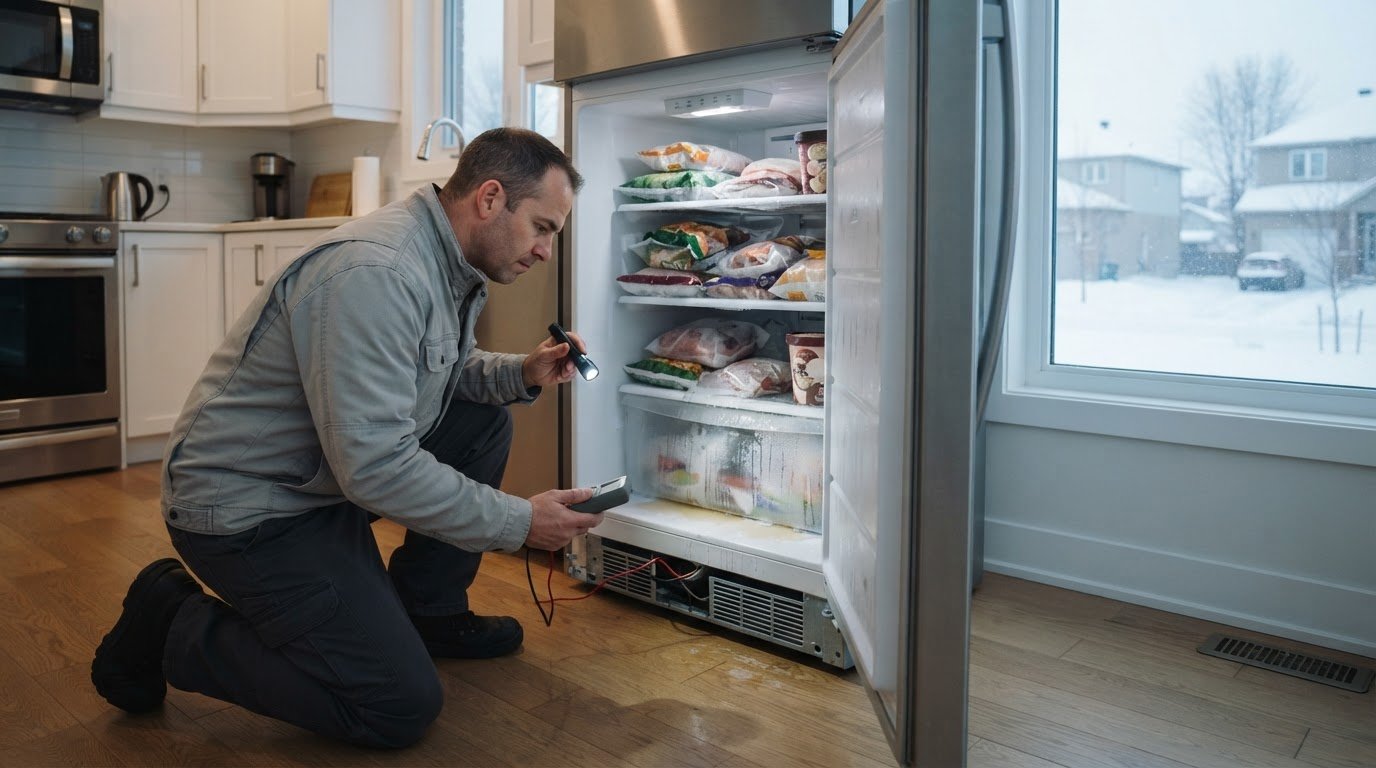
Observe the pattern without removing panels or touching electrical parts. Is the frost a thin coating over a broad surface, a thick layer in one area, or a patch that returns after defrosting? Note where it appears, such as near the door opening, on a shelf or around stored food. The location can help describe the problem, but it doesn’t identify the cause by itself.
Also note any changes in performance. Is food softer than usual, or does the freezer seem less cold than normal? Does the door close easily, or could a package be in the way? A door that doesn’t seal shut can let warm, moist air enter. Check accessible areas for obstructions and look for obvious gaps when the door is closed.
Thick ice, frost that repeatedly returns, or buildup alongside a change in cooling deserves more attention than a minor, occasional coating. Note when you last defrosted the unit and whether frost returns in the same place. That history is more useful than guessing at a failed part from appearance alone.
Common Causes of Frost in a Freezer and the Clues to Notice
Different issues can create similar frost, so treat what you see as a clue rather than proof of a fault. Begin with accessible checks: confirm the door closes fully, look for items blocking visible vents, and consider whether uncovered or warm food may have added moisture. These checks can help narrow down possibilities without opening the appliance.
Door use, storage habits, and the freezer door seal
Frequent door opening, a door left ajar or a bulky package caught in the opening can let warm, humid air enter. Uncovered food and food stored while still warm can add moisture as well. Check that shelves and packages don’t prevent the door from closing. Look over the accessible gasket for debris, splits or sections that appear loose. A visible gap or damaged-looking seal is a clue, not a complete diagnosis.
When a frost-free freezer may have a defrost or airflow issue
Recurring frost in a frost-free model may need further investigation, especially if it returns in the same area after defrosting. A defrost-system issue is one possibility, but visible frost can’t confirm it. Check that accessible interior vents aren’t blocked by food. Don’t remove covers to inspect hidden parts. If frost returns alongside a change in cooling, stop guessing and arrange a diagnosis.
Keep a brief record of where frost appears, whether it returns after defrosting and whether cooling seems different. This can help distinguish a one-time event, such as a door left ajar, from a recurring problem that needs assessment. The pattern can guide a technician’s investigation, but it doesn’t identify a failed part by itself.
If buildup persists despite safe checks, learn about residential freezer repair and arrange a diagnosis.
Freezer Frost Patterns: Compare Likely Causes Without Guessing
Where frost appears can help narrow down what to check, but it can’t identify a failed part. Compare the pattern with door closure, recent use and any changes in cooling, then use the safe next step in the table as a starting point.
| Observed frost pattern | Possible explanation | Safe next step |
|---|---|---|
| Frost concentrated near the door or opening | The door may not be closing fully, the accessible gasket may be dirty or damaged, or humid air may be entering. | Check for packages blocking the door and visible debris or damage around the seal. |
| A light or heavier coating across several interior surfaces | Repeated door opening, a door left ajar, or added moisture from uncovered or warm food may be contributing. | Review door habits and food storage, then consult the manual for defrosting and operating guidance for your model. |
| Frost repeatedly returns in a frost-free model | A defrost or airflow issue is possible, though the pattern alone can’t establish the cause. | Check only accessible areas for blocked vents. If frost returns or cooling changes, arrange an assessment. |
Frost near the door versus frost across the freezer
Frost near the opening makes door closure and the visible seal sensible first checks. Widespread frost may instead prompt a review of how often the door is opened, whether food is covered and whether the manual recommends defrosting. Neither location proves a specific cause. Note the pattern and what was happening before it appeared.
Recurring frost in a frost-free model
A single incident after the door was left open can have a different explanation from frost that returns during normal use. Track how soon it reappears, whether cooling seems different and whether you notice unusual sounds. These details help describe the issue, but they don’t confirm an internal fault. If buildup persists, don’t remove covers or test hidden parts. Arrange a repair diagnosis instead.
A symptom is what you observe; a diagnosis is the confirmed cause. Frost patterns can guide safe checks, but further assessment is needed to determine whether an internal problem is involved.
Safe Checks for Freezer Frost Buildup You Can Try at Home
Start with checks that don’t require tools or access to hidden parts. A simple sequence can rule out visible obstructions and help you describe what’s happening. Stop if a check would involve wiring, internal covers or unfamiliar repair work.
A simple sequence for checking the door and storage
- Check the door closure. Look for food packages, baskets or shelves that may prevent the door from shutting fully. Close it normally and make sure nothing is caught in the opening.
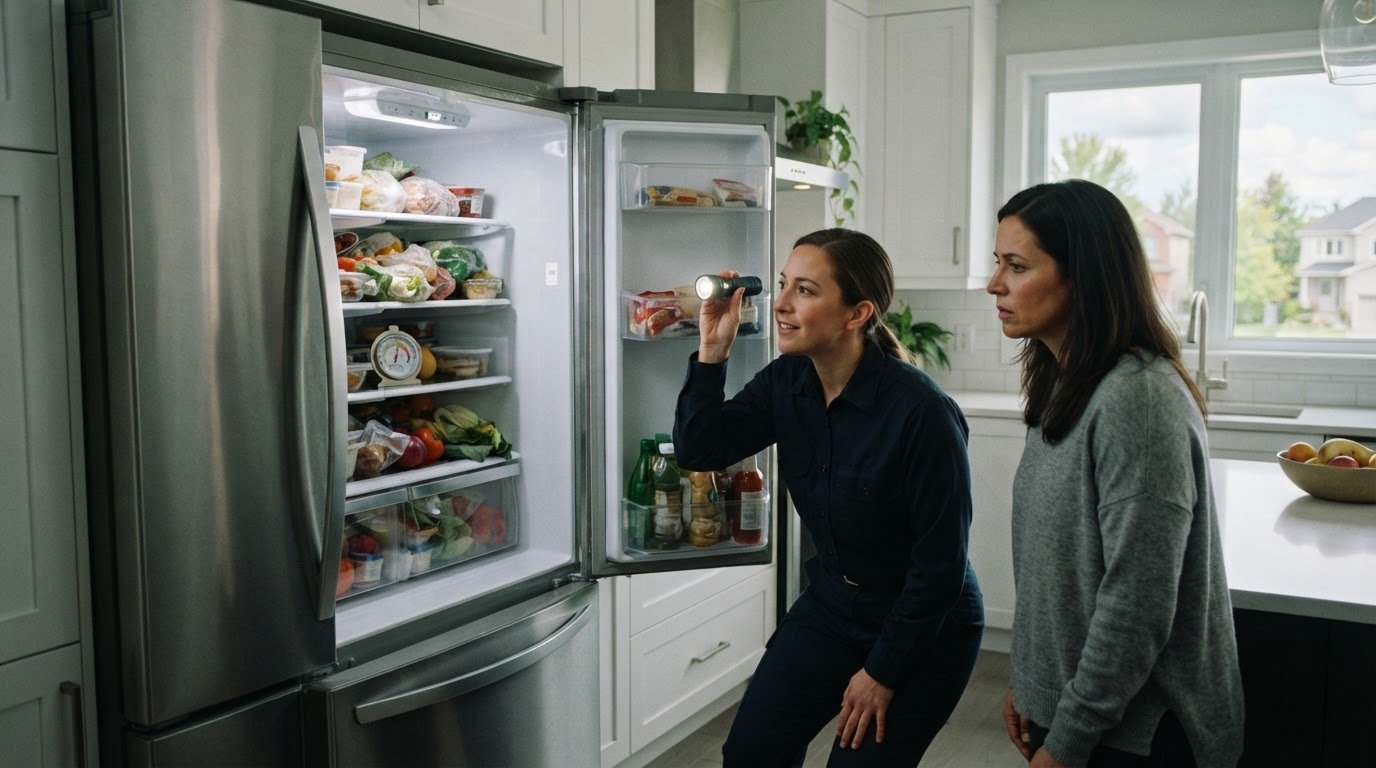
- Inspect the accessible gasket. Look for visible debris, tears or sections that appear loose. If needed, gently wipe the accessible surface with a soft cloth. Don’t pull the gasket away or try to adjust or repair it.
- Check the interior vents. If they’re visible and accessible, make sure stored items aren’t covering them. Don’t remove vent covers or reach behind them.
- Record what you observe. Note where frost is collecting and whether it returns after ordinary use. Record any change in cooling, too. A brief note or photo can help track whether the pattern is changing.
- Follow the manual for defrosting. Use the instructions for your specific model, including directions about preparing the freezer or disconnecting power. Never chip at ice with a knife or another sharp tool, and don’t use a hair dryer, heat gun or other direct heat source.
When to stop troubleshooting and arrange a diagnosis
Stop if frost returns quickly after safe checks or defrosting, or if the freezer no longer seems to maintain its expected cooling. Don’t remove internal covers, bypass safety devices or work on energized equipment. These steps can expose you to hazards and may damage the appliance. Internal defrost or airflow problems need proper assessment, not trial-and-error repairs.
Before requesting service, gather the freezer’s brand and model number, where the frost appears, when it first appeared and whether it returns. Include any change in cooling or unusual sounds, along with the safe checks you’ve already tried. This gives the repair diagnosis useful context without treating a visible symptom as a confirmed cause.
If frost persists, find information about booking a freezer repair diagnosis online.
When Nepean Homeowners Should Arrange Freezer Repair
Arrange a repair diagnosis if frost is thick, keeps returning after safe checks or appears alongside a change in cooling. A single event, such as the door being left open, may have a straightforward explanation. Persistent frost is different: door and storage checks may not resolve the underlying issue. Frost by itself doesn’t confirm a fault, but recurring buildup is a reason to stop guessing.
Changes in cooling deserve particular attention. If food is softening or the freezer no longer seems to keep items as cold as expected, don’t rely on repeated defrosting as a fix. Note what you’ve observed and arrange an assessment. An inspection helps identify the cause before a repair is recommended, so the next step is based on the appliance’s condition rather than the frost pattern alone.
What information helps diagnose a frost problem
Before requesting service, find the brand and model number on the appliance label and note whether your freezer is manual-defrost or frost-free. Describe where the frost appears, when you first noticed it and how quickly it returns after defrosting or normal use. Include any change in cooling or unusual sounds. Clear photos can show the frost’s location and extent, but they can’t confirm the underlying fault.
The timeline matters. Frost that appeared after the door was left ajar provides different context from frost that repeatedly returns during ordinary use. Share what you checked, too, such as whether packages were blocking the door. These details help focus the diagnosis without asking you to inspect internal parts.
Arrange residential freezer repair in Nepean
Appliance Technician provides residential freezer repair in Nepean and serves homeowners in Ottawa, Gatineau, Kanata, Nepean, Orleans, Gloucester, Barrhaven, Stittsville, Aylmer, Hull, Chelsea, Vanier and Cumberland. If frost persists despite safe checks, a repair diagnosis can help identify the cause and determine whether repair is appropriate. Include the model number, symptom timeline and photos with your service request.
Arrange a freezer repair request online when you’re ready.
Take the Next Step if Frost Keeps Returning
Light frost can follow ordinary freezer use, but thick or recurring buildup deserves attention, especially if cooling changes. Frost patterns offer clues, not a confirmed diagnosis. Start with safe checks around the door, seal and accessible storage areas, and follow your model’s manual for defrosting. Don’t remove covers, chip ice with sharp tools or apply direct heat.
If frost persists after those checks, note where it appears, how quickly it returns and whether freezer performance has changed. Appliance Technician provides residential freezer repair in Nepean, with an assessment to help identify the cause before a repair recommendation.
When you’re ready, book a freezer repair request online and include the model number and a clear description of the symptoms.
Frequently Asked Questions
Is frost buildup in a freezer normal?
A small amount of frost can develop as moisture enters during normal use, especially in a manual-defrost freezer. Thick, uneven or recurring frost is more concerning than a light coating, particularly in a frost-free model or when cooling changes. Manual-defrost models need defrosting according to the manufacturer’s instructions. Check your appliance manual for guidance specific to your model. Frost alone doesn’t prove a particular fault.
Why is my frost-free freezer building up ice?
A frost-free freezer can build up ice if warm, humid air repeatedly enters, such as when the door is left ajar or doesn’t seal properly. Blocked interior vents may also affect airflow. If frost keeps returning during ordinary use, a defrost or airflow issue is another possibility. Check only accessible areas and don’t remove covers. Recurring ice, especially alongside cooling changes, calls for further assessment.
Can a freezer door seal cause frost buildup?
Yes. A door that doesn’t close fully or a gasket that isn’t sealing properly can let warmer, moist air enter and freeze inside. Check that food packages aren’t blocking the door, and look for visible debris, tears or loose areas on the accessible gasket. A gap or damaged spot is a useful clue, but it doesn’t confirm the full cause. Avoid pulling the seal away or attempting an unfamiliar repair.
How do I safely remove frost from my freezer?
Follow the defrosting instructions in your freezer’s manual, since procedures vary by model. Protect the floor from meltwater and move food according to the manual’s guidance. Never chip ice with a knife or other sharp tool, and don’t apply direct heat with a hair dryer or heat gun. If defrosting requires steps you’re unsure about, or frost returns soon afterwards, stop and arrange a diagnosis rather than repeating the process.
What happens if I ignore heavy frost in my freezer?
Heavy frost can take up storage space and may interfere with drawers, shelves or the door closing properly. If ice obstructs airflow or the appliance is struggling to maintain its expected cooling, food may not stay properly frozen. Frost alone doesn’t confirm a malfunction, but recurring buildup or changes in cooling shouldn’t be ignored. Note what you observe and follow your model’s manual for safe next steps.
When should I book freezer repair for frost buildup in Nepean?
Arrange a diagnosis if frost keeps returning after safe checks, becomes heavy or appears alongside a change in cooling. Appliance Technician provides residential freezer repair in Nepean. Before making a service request, note the brand and model, where frost forms, how quickly it returns and any cooling changes or unusual sounds. Clear photos may help show the pattern, but they can’t confirm the underlying cause.
Can I fix recurring freezer frost buildup myself?
You can address simple, visible issues, such as a package blocking the door or debris on an accessible gasket surface. Follow the manual for any defrosting. If frost keeps returning, cooling changes, or resolving it would require removing covers, handling wiring or working on energized parts, stop. Don’t bypass safety devices or attempt unfamiliar repairs. A diagnosis can help identify the cause before any repair is recommended.