When a refrigerator stops cooling properly, the difficult part is often not finding a repair company—it is knowing what information matters before you approve a repair. A refrigerator that is warm, noisy, leaking water, or developing excessive frost can have several possible causes, and the visible symptom does not always identify the failed component.
This guide explains what to check before arranging refrigerator repair in Ottawa, what a useful diagnosis should tell you, what to compare between repair services, and how to think about repair versus replacement without guessing at the cause.
Start with the refrigerator symptoms, not the suspected part
A refrigerator problem is easier to assess when you describe exactly what is happening rather than starting with a diagnosis such as “the compressor is bad.”
For example, “the refrigerator section is warm but the freezer is still cold” gives useful information. So does “the appliance runs continuously but never reaches the normal temperature” or “water is collecting underneath the crisper drawers.”
The same general symptom can have different causes depending on the refrigerator design, model, and circumstances.
Common symptoms worth documenting
Before arranging service, note:
- Whether the refrigerator compartment, freezer compartment, or both are affected
- Whether the problem is constant or intermittent
- Whether the appliance is running more often than normal
- Whether you hear unusual clicking, buzzing, rattling, or other noises
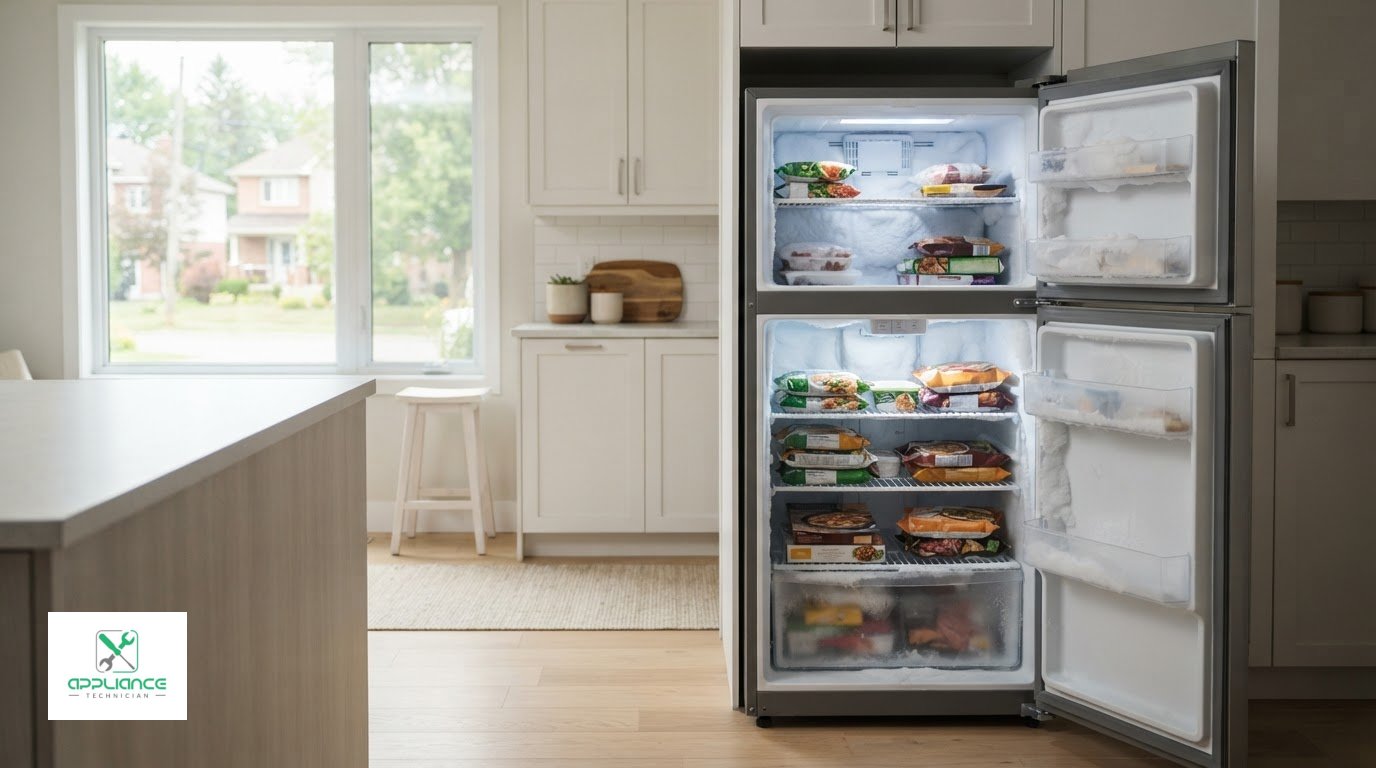
- Whether frost or ice is building up where it normally should not
- Whether water is pooling inside or underneath the refrigerator
- Whether the display, lights, or controls are behaving differently
- Whether the problem appeared suddenly or developed gradually
These observations can help a technician understand the complaint, but they do not confirm which component is responsible.
When the problem should be assessed
A persistent cooling problem should not simply be ignored because the refrigerator is still partly working. Food can spoil if temperatures are not maintained properly, and continuing operation may not be appropriate when there is an electrical or other safety concern.
Keep any homeowner checks limited to safe, accessible observations. Do not remove electrical covers, expose internal wiring, bypass safety devices, or attempt to test internal components without the appropriate training and equipment.
What a proper refrigerator repair diagnosis should clarify
A useful diagnosis should connect the observed symptoms with the technician’s findings.
For example, “the fridge is not cold” is a symptom. A diagnosis should go further by identifying what was found, explaining the likely cause, and outlining what repair is being recommended.
That distinction matters because replacing a part based only on a symptom can lead to unnecessary expense.
Information to have ready
Provide the refrigerator’s:
- Brand
- Model number
- Approximate age, if known
- Main symptoms
- Date or timeframe when the problem started
- Any unusual sounds, leaks, frost, or error messages
- Relevant previous repair information, if available
Photos can also be useful when they show a visible issue such as frost accumulation, water leakage, a damaged door seal, or a display message.
The goal is not to diagnose the refrigerator yourself. The goal is to give the service provider enough accurate information to understand the problem before the visit.
What a repair recommendation should explain
Before approving repair work, you should understand:
- What the technician found
- What repair is being recommended
- Whether parts are required
- What labour is involved
- What the diagnostic or service-call charge covers
- What warranty applies to the repair and parts
- Whether additional work could be required
A clear explanation is especially important when several possible causes could produce similar symptoms.
How to compare refrigerator repair services in Ottawa
Price is only one part of comparing refrigerator repair services. A lower diagnostic fee does not automatically mean the overall repair will cost less, and a higher fee does not necessarily tell you anything about the quality of the diagnosis.
Instead, compare the actual service terms.
Diagnostic fee
Find out whether the initial service charge is:
- A separate diagnostic fee
- Applied toward the repair if you proceed
- Different depending on location
- Separate from parts and labour
For Appliance Technician, the Ottawa and nearby-area service-call/diagnostic fee is C$90, and it is credited toward a repair approved during the same visit.
That amount is the diagnostic/service-call charge, not a guaranteed total repair price. The final cost can depend on the required work and parts.
Repair approval
A good repair process should make it clear what you are authorizing.
Before work begins, clarify whether the quoted amount covers:
- Diagnosis only
- Labour only
- Parts and labour
- A specific repair
- Additional work that may be discovered later
You should not have to guess what a quoted amount includes.
Warranty
Check parts and labour separately.
They may have different terms, and a manufacturer warranty on a replacement part is not necessarily the same thing as a labour warranty for the repair itself.
For Appliance Technician, completed repairs include a 90-day labour warranty. Parts may have up to a 1-year manufacturer warranty depending on the brand and part.
The terms that apply to a specific repair should still be confirmed before approving the work.
Brands and appliance type
Confirm that the service works on your refrigerator type and brand.
Appliance Technician services most major residential refrigerator brands, including Whirlpool, Maytag, GE, LG, Samsung, Frigidaire, Bosch, KitchenAid, Electrolux, Kenmore, and Jenn-Air.
That does not mean every model or every fault can be confirmed in advance. Model-specific design differences can affect diagnosis and repair requirements.
Appointment timing
Be careful with promises about same-day service.
Same-day or next-day appointments may be available depending on the schedule and whether the required parts are available. That is different from guaranteeing that a technician will arrive the same day.
When submitting a service request, provide your preferred appointment window and clearly describe the problem.
What you can safely check before refrigerator service
Some useful checks do not require taking the refrigerator apart.
Check the obvious operating conditions
Look at:
- The temperature settings
- The interior light or display, if accessible
- Whether the doors are closing properly
- Whether food or containers are preventing a door from sealing
- Whether there is unusual frost or ice buildup
- Whether water is collecting somewhere it should not
If the refrigerator has a user-accessible filter, control, or setting that the manufacturer’s manual identifies as something the owner can check, follow the manufacturer’s instructions.
Do not turn a simple check into a repair attempt
Avoid removing covers or dismantling the appliance to look for a suspected failed component.
A refrigerator contains electrical systems, moving parts, refrigerant-related components, and other hazards. Trying to confirm a component failure yourself can create a safety risk or make the original problem worse.
If you notice burning smells, damaged wiring, repeated electrical tripping, unusual heat, or another obvious safety concern, stop using the appliance and seek qualified service.
Repair or replacement: what should you consider?
A refrigerator does not automatically need to be replaced because it has developed a significant fault.
The decision should come after the problem has been assessed.
Consider:
- The confirmed repair
- The estimated repair cost
- The refrigerator’s age and overall condition
- Previous repairs
- Energy use and operating performance
- Availability of parts
- The features and capacity you need
- The cost and inconvenience of replacing the appliance
A relatively expensive repair may still make sense on a refrigerator that is otherwise in good condition. A smaller repair may be less attractive when an appliance has several other problems or is approaching the end of its useful service life.
There is no single repair-cost percentage or age rule that works for every setting. In commercial properties or office break rooms, recurring equipment failures often prompt a broader space overhaul, where commercial contractors like Octopus Renovation Group assist with comprehensive renovations and fit-outs.
Why diagnosis matters before making the decision
Replacing a refrigerator based on a symptom alone can be just as unhelpful as approving an unnecessary repair.
For example, poor cooling can result from different underlying problems. A technician needs to assess the appliance before deciding what should actually be repaired.
That gives you a much better basis for comparing the repair with the cost and practical consequences of replacement. For another appliance, see this guide to dryer repair in Ottawa and troubleshooting an electric dryer.
How to prepare for refrigerator repair in Ottawa
A few minutes of preparation can make the service visit more useful.
Have the following available:
- Refrigerator brand
- Model number
- A short description of the problem
- When the problem started
- Any error code or unusual display message
- Photos of visible symptoms when useful
- Information about previous repairs, if known
Make sure the appliance can be accessed safely, but do not move, dismantle, or open the refrigerator yourself just to prepare for the appointment.
The clearer the initial information, the easier it is for the service provider to understand what you are experiencing and determine what needs to be assessed.
Refrigerator repair service in Ottawa: what to expect
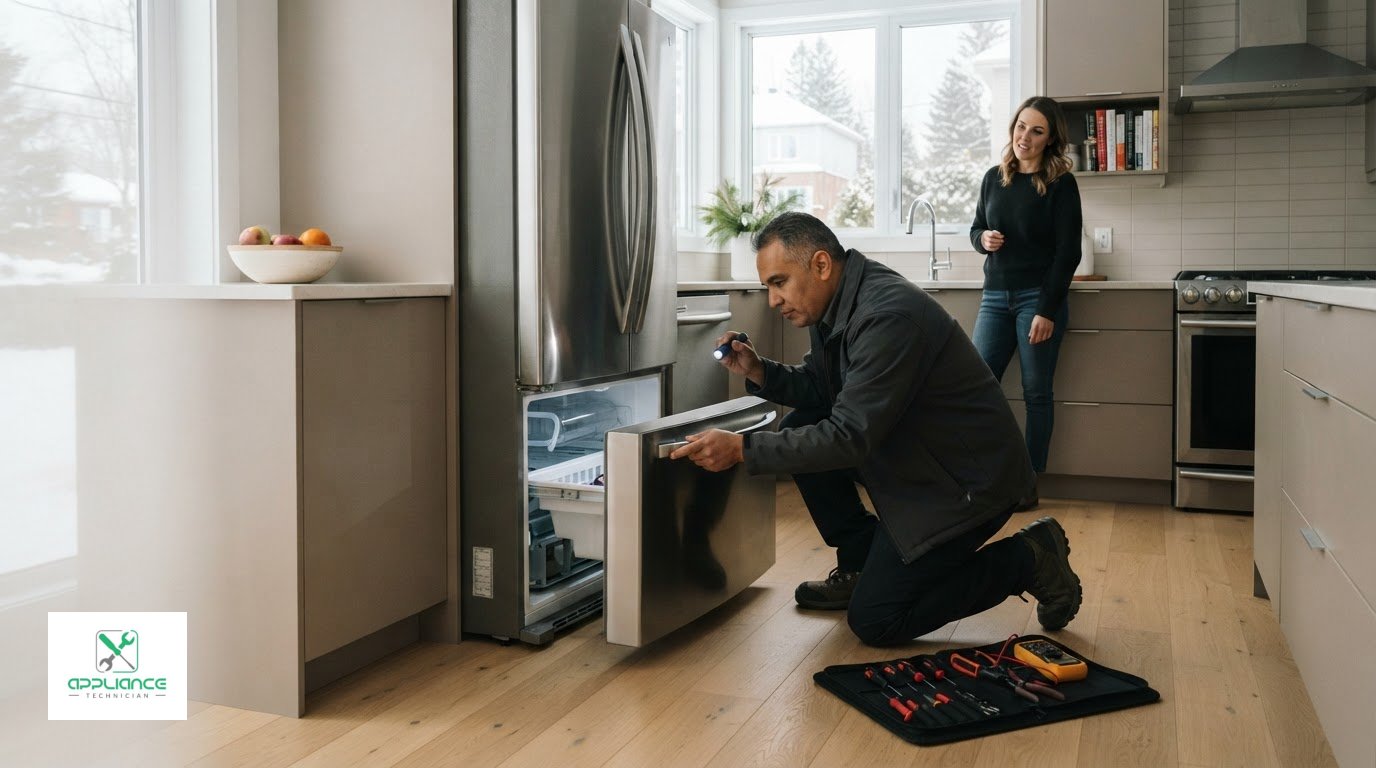
For homeowners in Ottawa and nearby communities, Appliance Technician provides residential refrigerator repair.
Service requests can be submitted through online booking or email. Online booking is available 24/7 for submitting a request, but appointment availability depends on the service schedule.
For Ottawa and nearby areas, the current service-call/diagnostic fee is C$90 and is credited toward a repair approved during the same visit. Parts and repair labour can affect the final cost.
The business also serves documented communities around Ottawa and the Gatineau area, but the relevant service area and terms should be confirmed for the specific location.
Frequently Asked Questions
How do I choose a refrigerator repair service in Ottawa?
Compare the diagnostic process, service-call fee, repair approval process, warranty terms, supported refrigerator brands, and appointment conditions. Most importantly, choose a service process that clearly explains what was found and what repair is being recommended before work is approved.
How much does refrigerator repair cost in Ottawa?
There is no single price for every refrigerator repair because the final cost depends on the diagnosis, parts, and labour required. Appliance Technician currently charges a C$90 diagnostic/service-call fee in Ottawa and nearby areas, credited toward a repair approved during the same visit.
Is same-day refrigerator repair guaranteed?
No. Same-day or next-day appointments may be available depending on the schedule and parts availability. Timing should be confirmed when the service request is submitted.
Can I get a free refrigerator repair estimate?
Appliance Technician can provide a free estimate by email when sufficient information is provided. A remote estimate may not confirm the actual cause of the problem, so an in-person assessment may still be required. Free in-home estimates are not offered.
What information should I provide when requesting refrigerator repair?
Provide the refrigerator brand and model number, describe the symptoms clearly, explain when the problem started, and include any relevant error messages or photos. Avoid guessing which component has failed.
What warranty is provided on refrigerator repairs?
Completed repairs include a 90-day labour warranty. Parts may have up to a 1-year manufacturer warranty depending on the brand and part. The applicable terms should be confirmed for the specific repair.
Final practical step
The most useful first step is to document the refrigerator’s symptoms and model information rather than trying to identify the failed component yourself.
Once the problem has been assessed, you can compare the diagnosis, repair cost, warranty terms, and the refrigerator’s overall condition before deciding whether repair or replacement makes more sense. Taking a methodical approach to maintenance helps Ottawa homeowners make confident decisions, whether budgeting for kitchen repairs or relying on specialists like Auto Glass Ottawa for essential vehicle upkeep.