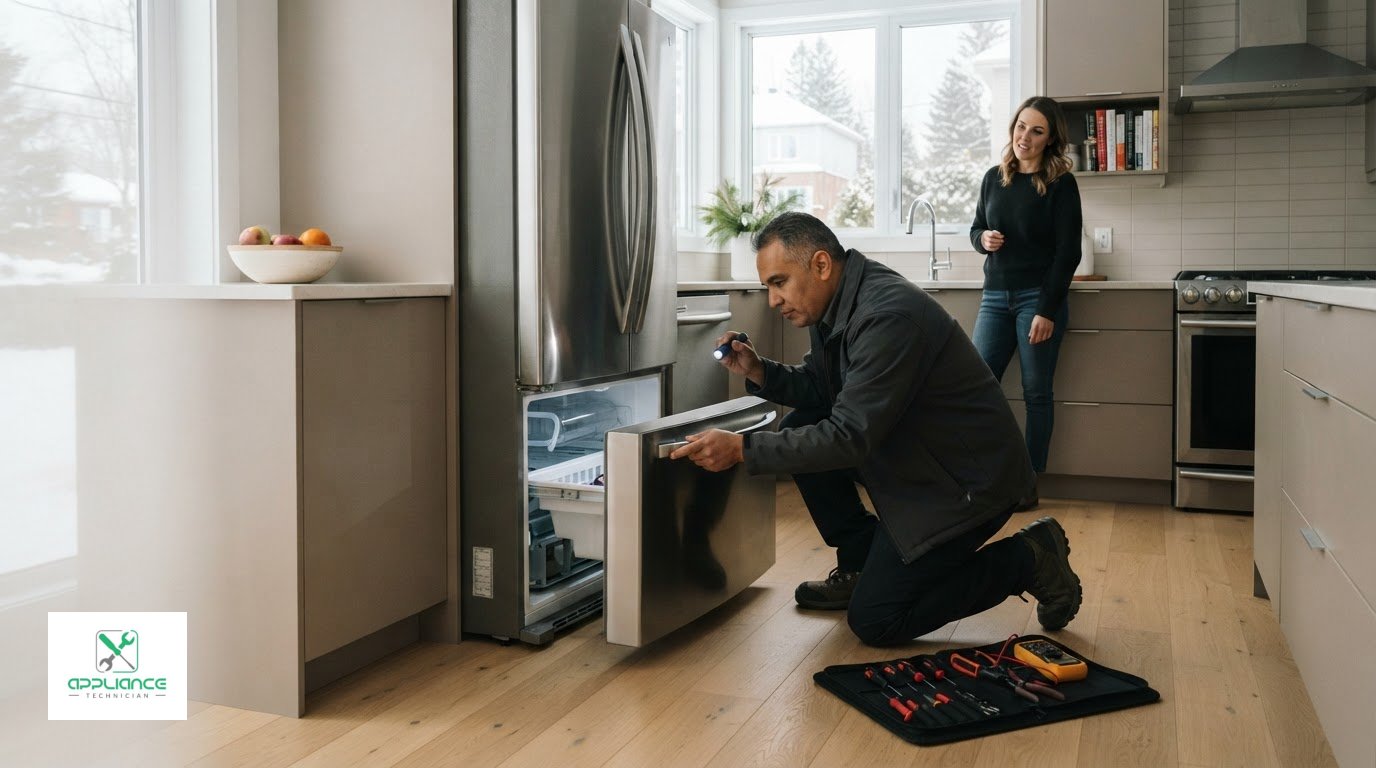
You reach for the milk carton, only to realize the interior of your refrigerator feels completely lukewarm even though the motor is humming along. When dealing with a fridge not cooling Ottawa homeowners face an immediate race against time to protect perishable groceries and keep household routines on track. It’s completely natural to stress over whether you’re looking at a minor setting bump or an expensive mechanical failure, especially when your family’s weekly food supply is on the line.
A methodical triage helps you separate quick household adjustments from serious component issues before panic sets in. This step-by-step diagnostic checklist will guide you in pinpointing the root cause of the cooling failure, keeping your perishable food safe, and determining whether a repair is practical and cost-effective. We will walk through everyday troubleshooting checks and highlight clear indicators that signal it is time to bring in a trusted local technician for prompt support.
Key Takeaways
- Perform quick triage within the first 15 minutes by checking power connections and verifying temperature dials before assuming a total mechanical breakdown.
- Follow an orderly diagnostic checklist to safely clean dusty condenser coils and listen for proper evaporator fan operation inside the freezer.
- Learn to differentiate between accessible airflow dampers and complex compressor start relay failures that produce rhythmic clicking sounds.
- When dealing with a persistent fridge not cooling Ottawa homeowners can rely on same-day professional diagnostics backed by parts and labour warranties.
Immediate Triage: What to Check in the First 15 Minutes
When dealing with a fridge not cooling Ottawa households face an immediate risk of losing hundreds of dollars in fresh groceries. Before assuming the worst or rushing to replace an appliance, perform a methodical fifteen-minute check. Most importantly, keep both doors closed as much as possible during this initial phase. Opening the cabinet repeatedly allows dense, chilled air to escape and accelerates food spoilage while you investigate.
Verifying Power Supply and Thermostat Controls
Start with the electrical foundation. Open the refrigerator door for a few seconds to see if the interior cabinet light turns on. If the cabinet stays completely dark, check your home breaker panel for a tripped kitchen circuit. Receptacles can trip unexpectedly, cutting power to the unit while neighbouring counter outlets continue working.
If power is present, examine the temperature controls immediately. Mechanical dials and digital touchpads often get bumped accidentally by tall containers or hands unloading groceries. Basic principles of how refrigerators work show that proper thermostat calibration directly dictates when the compressor cycles on to protect your food. Ensure the refrigerator compartment is set between 2°C and 4°C (35°F to 39°F) and the freezer is set near -18°C (0°F).
Inspecting Door Gaskets and Airflow Blockages
Warm ambient air easily overpowers your cooling system if the perimeter seal fails. Inspect the rubber gasket around each door for hardening, warping, or visible tears. You can verify the magnetic seal with a simple test:
- Close the door on a Canadian bank note so half rests inside and half sticks out.
- Pull the bill straight out slowly.
- Feel for light, steady resistance. If it slides out freely with no tension, the gasket is leaking warm room air inside.
Next, check the interior air registers. Overcrowded shelves packed with tall juice jugs, bulk containers, or cereal boxes can block the internal air vents. Pushing items at least five centimetres away from back-wall louvers restores the circulation needed to drop cabinet temperatures back to safe storage levels.
Step-by-Step Diagnostic Checklist for Ottawa Homeowners
Once you rule out power hiccups and blocked vents, move systematically through mechanical components. Modern appliances rely on continuous heat exchange and balanced airflow to stay cold. Working through this physical checklist helps isolate the exact failure point without guesswork.
Cleaning Dusty Condenser Coils Beneath or Behind the Unit
Pull the refrigerator forward and unplug it from the wall. Locate the black tubing grid either behind the lower front toe grille or running along the exterior back panel. Pet fur, dust, and kitchen grease form a thick insulating blanket over these metal loops. When coated in debris, coils cannot release heat extracted from inside the cabinet, forcing your compressor to work endlessly until cooling stops entirely. Vacuum the assembly thoroughly and sweep stubborn buildup loose with a dedicated appliance brush every six months.
Evaluating Evaporator and Condenser Fan Motors
Listen closely after reconnecting the power. Refrigerator systems operate two separate fans that must run in unison to circulate air:
- Evaporator fan: Located behind the interior freezer partition. It pushes cold air into the fresh food cavity. If you hear squealing, rattling, or eerie silence with the doors closed, the motor bearing has seized.
- Condenser fan: Mounted underneath the cabinet next to the compressor. It pulls cool room air across the warm coils. Check for physical debris, such as stray twist ties or hardened grime, jamming the fan blades.
Identifying Defrost System and Sensor Failures
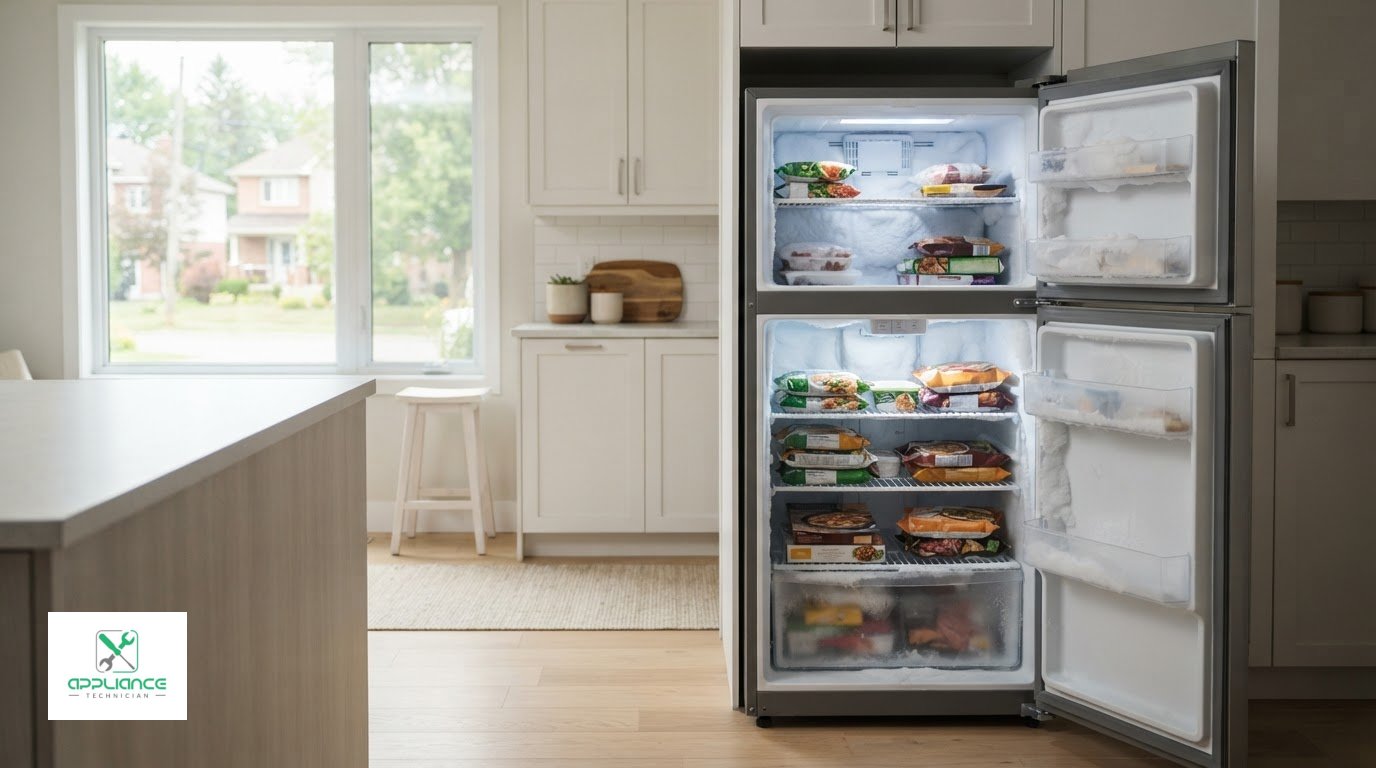
Inspect the interior rear wall of your freezer compartment. A light dusting of frost is normal, but a solid sheet of thick white ice points to a failed automatic defrost circuit. When the defrost heater, bimetal thermostat, or sensor malfunctions, frost accumulates rapidly until it completely seals off the evaporator fins. This ice dam blocks circulation into the fresh food section entirely, making the bottom warm while the freezer remains cold. Never chip at this surface with metal knives or screwdrivers, as puncturing internal aluminum tubing ruins the unit permanently. A blocked defrost drain resulting from this ice buildup can also lead to a refrigerator leaking water Ottawa homeowners often discover pooling on the kitchen floor.
If your diagnostics point to a frozen evaporator core or a fan failure in a persistent fridge not cooling Ottawa residents can count on Appliance Technician for swift, dependable on-site diagnostics that pinpoint faulty parts before fresh food spoils.
While consumer advocacy around Ontario’s Right to Repair laws aims to broaden public access to technical manuals and diagnostic information, handling complex electrical testing still demands careful handling.
Serious Mechanical Breakdown vs Quick Fix: How to Tell
Distinguishing between an accessible adjustment and a major component breakdown saves both time and money. While brushing off lint from exterior coils is completely safe for any homeowner, disassembling electrical harnesses or tapping into refrigeration plumbing poses genuine hazards. Recognizing precise mechanical symptoms lets you draw a firm line between a simple DIY effort and a scenario requiring qualified intervention.
Compressor and Start Relay Warning Signals
Listen intently near the bottom rear of the refrigerator. A healthy compressor operates with a steady, quiet hum. If you notice a distinct, metallic click every two to three minutes followed by dead silence, the start relay is failing. This small plastic component plugs directly onto the side of the compressor to kick-start the motor windings. When the relay burns out, the compressor motor tries to engage, draws excessive amperage, trips its thermal overload protector, and shuts off before it can circulate refrigerant.
Sealed-System Leaks and Electronic Control Board Glitches
When experiencing a fridge not cooling Ottawa homeowners often observe confusing compartment differences. Review this symptom breakdown to identify the underlying failure:
- Freezer stays frozen, fresh food warms up: This points to a motorized damper door stuck in the closed position, blocking chilled air from entering the lower cabinet.
- Both compartments gradually warm while the compressor hums continuously: This condition signals a refrigerant leak within the sealed copper tubing. Look for telltale oily residues around copper brazed joints. Under federal and provincial environmental rules, repairing sealed refrigerant systems requires certified recovery gear and licensed handling.
- Erratic temperature swings and unlit digital readouts: Modern refrigerators depend heavily on centralized motherboards. Blown capacitors or scorched solder points on the electronic control board cause uncoordinated cycling, leaving fans and cooling hardware completely unresponsive.
Food Safety Guidelines When Cooling Fails
While isolating these mechanical problems, protecting your household from foodborne illness remains the top priority. Keep an appliance thermometer in the main compartment to track ambient readings accurately. Safe food storage demands that fresh food temperatures remain strictly at or below 4°C (40°F). If meat, poultry, fish, soft cheeses, or opened dairy products sit above 4°C for more than two hours, discard them immediately. While a troubleshooting process for a fridge not cooling Ottawa kitchens protects valuable equipment, compromising on food safety is never worth the risk.
When to Call for Professional Fridge Repairs in Ottawa
While clearing dusty vents is well within most homeowners’ capabilities, knowing when to put the tools away is critical. Internal refrigeration mechanics involve high-voltage electricity and pressurized fluids that demand specialized training to handle safely. Recognizing when your appliance requires professional service prevents accidental damage and keeps your family safe.
Why DIY Sealed System and Electrical Repairs Are Hazardous
Modern residential refrigerators manufactured over recent years frequently utilize R600a isobutane refrigerant. While environmentally friendly, isobutane is a flammable hydrocarbon. Tapping lines without spark-free recovery tools risks combustion right inside your kitchen. Additionally, electronic inverter boards and high-capacity start capacitors hold dangerous electrical charges even when the power cord is disconnected. Forcing open sealed interior panels can also puncture delicate interior liners, instantly voiding manufacturer warranties and turning a manageable repair into a complete loss.
Local Operating Factors Across Ottawa and Gatineau Homes
Our regional climate subjects cooling appliances to distinct stresses throughout the year. Sweltering Ottawa summers bring intense humidity, causing moisture to rush inside whenever the cabinet door opens. This damp air condenses rapidly, accelerating frost accumulation on cold evaporator coils. Secondary refrigerators kept in unfinished basements across Nepean, Kanata, or Orleans face similar challenges, working harder against humid ambient air. Moreover, severe summer thunderstorms across the National Capital Region frequently cause voltage fluctuations that damage sensitive microprocessors on modern digital control boards.
What to Expect During a Professional Diagnostic Service Visit
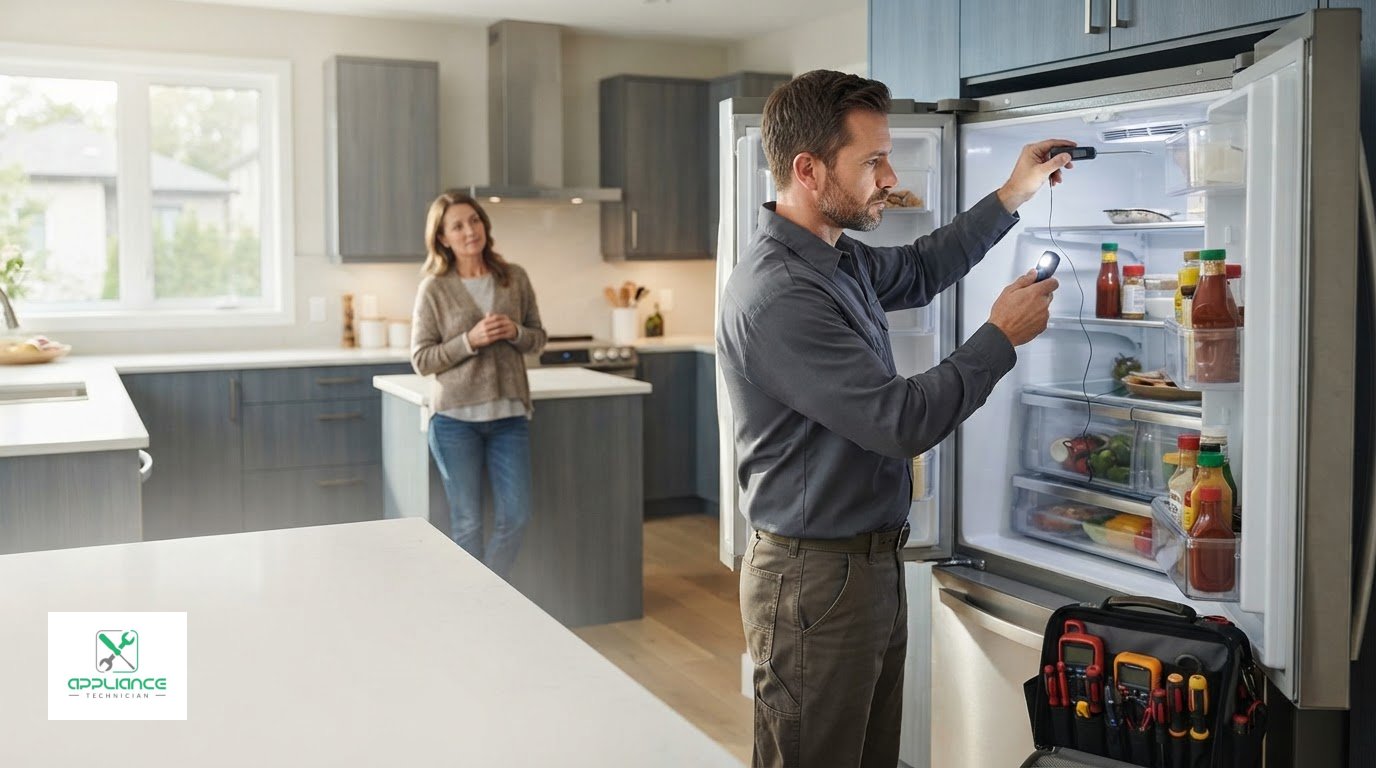
When dealing with a persistent fridge not cooling Ottawa homeowners deserve thorough troubleshooting rather than guesswork. A licensed technician uses precise diagnostic instruments to test:
- Electrical continuity and resistance values across temperature thermistors and defrost sensors.
- Running amperage draw on inverter compressor motors to catch internal mechanical seizing early.
- Proper airflow volume delivered through motorized dampers into the fresh food section.
Modern appliances typically carry an operational lifespan of 6 to 9 years. A reputable specialist provides a clear, upfront assessment based on the 50 percent rule: if an older machine requires repairs approaching half the cost of buying a comparable new unit, replacing it makes better financial sense. If you need urgent assistance to protect your groceries, schedule an appointment with Appliance Technician for same-day fridge repair backed by warranty coverage on parts and labour.
Restoring Reliable Cooling with Local Ottawa Appliance Specialists
When routine maintenance fails to bring temperatures down, prompt professional intervention prevents costly grocery loss. Waiting days for an appointment often means throwing out hundreds of dollars in spoiled food. Working with a dedicated neighbourhood service team ensures your kitchen returns to normal functioning with minimal disruption to your daily routine.
Comprehensive Service Coverage Throughout the National Capital Region
Local technicians provide responsive, on-site service across Eastern Ontario and Western Quebec. Whether you live in an established central neighbourhood or an expanding suburb, service vehicles are positioned to reach you quickly. Complete regional coverage includes:
- Western suburbs: Kanata, Stittsville, Nepean, and Barrhaven
- Central core: Downtown Ottawa, The Glebe, Westboro, and Gloucester
- Eastern communities: Orleans, Blackburn Hamlet, and Cumberland
- Outaouais region: Hull, Aylmer, and central Gatineau
Mobile service vans arrive equipped with specialized testing tools and inventory containing factory-certified components. Carrying universal start relays, temperature sensors, bimetal thermostats, and fan assemblies directly in the vehicle allows technicians to resolve the majority of cooling failures during the initial visit.
Warranty-Backed Workmanship and Certified Brand Expertise
Modern refrigerators feature sophisticated electronics requiring brand-specific diagnostic approaches. While brands like Whirlpool and Maytag frequently require straightforward mechanical maintenance, modern Samsung and LG units often present complex electronic control or sensor challenges. Experienced technicians handle the full spectrum of major residential brands, including KitchenAid, GE, Frigidaire, and Bosch.
Every completed repair comes backed by solid warranty coverage on all replacement parts and technician labour. This transparent approach guarantees that if an installed component fails or an issue recurs, you receive prompt support without hidden surprises. Homeowners also receive realistic advice on whether repairing a failing unit makes financial sense over the long term.
Do not let rising cabinet temperatures ruin your groceries. If you are struggling with a fridge not cooling Ottawa specialists are ready to help. Contact Appliance Technician today using their convenient 24/7 online booking system to secure same-day diagnostic service across the National Capital Region.
Restore Safe Temperatures and Protect Your Groceries Today
A cooling breakdown does not have to turn into an expensive kitchen catastrophe. By systematically checking electrical connections, clearing dust from condenser coils, and ensuring interior air vents remain unobstructed, you can quickly rule out simple household fixes before groceries spoil. When persistent issues like clicking start relays, frosted evaporator coils, or faulty control boards leave your fridge not cooling Ottawa homeowners need fast, dependable technical support.
Protecting your fresh food requires prompt action from professionals you can trust. Our fully licensed and insured local repair technicians offer same-day service across Ottawa, Kanata, Nepean, and Gatineau, arriving ready to diagnose and resolve mechanical failures on the spot. Every repair comes backed by a comprehensive warranty on all parts and labour, giving your household total confidence and lasting peace of mind. Book your same-day fridge repair in Ottawa today and restore dependable cooling to your home without delay.
Frequently Asked Questions
Why is my refrigerator running but the interior compartments are not cold?
If your unit runs continuously without cooling, the most common culprit is heavy frost buildup on the evaporator coils or a defective evaporator fan failing to circulate air. Other typical causes include dirty exterior condenser coils blocking heat dissipation, a failed compressor start relay, or a sealed-system refrigerant leak. A licensed technician can test electrical continuity and airflow to pinpoint whether the issue is electronic or mechanical.
How long can food safely stay cold inside a refrigerator that stopped cooling?
An unopened refrigerator will keep food safely cold for approximately four hours after losing cooling capacity. A full, closed freezer can hold safe temperatures for up to 48 hours, or 24 hours if half full. Keep the doors shut tight to preserve chilled air. Any perishable items like meat, dairy, or cooked leftovers exposed to temperatures above 4°C for over two hours must be thrown out.
Can dirty condenser coils really cause my fridge to stop cooling entirely?
Yes, heavily clogged condenser coils can completely halt the cooling cycle. When pet hair, carpet lint, and kitchen dust insulate the coils, the appliance cannot release heat extracted from inside the cabinet. The compressor overheats, triggers its thermal overload switch, and shuts down prematurely to prevent permanent damage. Vacuuming coils beneath or behind the unit every six months restores proper airflow and prevents unexpected cooling failure.
What does a repeated clicking sound coming from behind my refrigerator mean?
A repetitive clicking noise occurring every two to three minutes points to a malfunctioning compressor start relay or overload protector. The relay attempts to kick-start the compressor motor, but a damaged internal capacitor or burnt terminal prevents full engagement. This causes the motor to overheat and trip the overload switch with an audible click. Replacing the faulty start relay before the compressor suffers internal burnout solves the problem.
Is it worth repairing a warm refrigerator that is over ten years old?
It depends on the failing component and the overall condition of the cabinet. With modern appliances having an expected lifespan of 6 to 9 years, a ten-year-old fridge with a failed sealed system or burnt-out compressor is often better replaced. However, simple repairs like replacing a jammed defrost fan, thermostat, or door gasket remain practical and cost-effective solutions that extend the unit’s operating life without buying new.
How quickly can a technician arrive in Ottawa for emergency fridge repair?
When facing an urgent fridge not cooling Ottawa homeowners can book same-day diagnostic service across the city, including Nepean, Kanata, Orleans, and Gatineau. Technicians travel in fully stocked mobile vans carrying factory-certified replacement fans, relays, and sensors. Booking an appointment through 24/7 online scheduling ensures an insured local tradesperson arrives quickly to test electrical components and protect your perishable groceries from spoiling.
Why is the freezer working normally while the fridge compartment stays warm?
This specific issue usually points to blocked airflow between the two compartments rather than a cooling breakdown. Common causes include a frosted evaporator coil assembly choking air channels, a failed evaporator fan motor, or a broken motorized diffuser damper stuck shut. For homeowners dealing with a fridge not cooling Ottawa climate conditions, like humid summer air leaking through worn door seals, can also cause rapid coil icing that chokes airflow. Note that a clogged defrost drain resulting from this ice accumulation may simultaneously cause a refrigerator leaking water in Ottawa homes, creating puddles on the kitchen floor that can damage flooring.